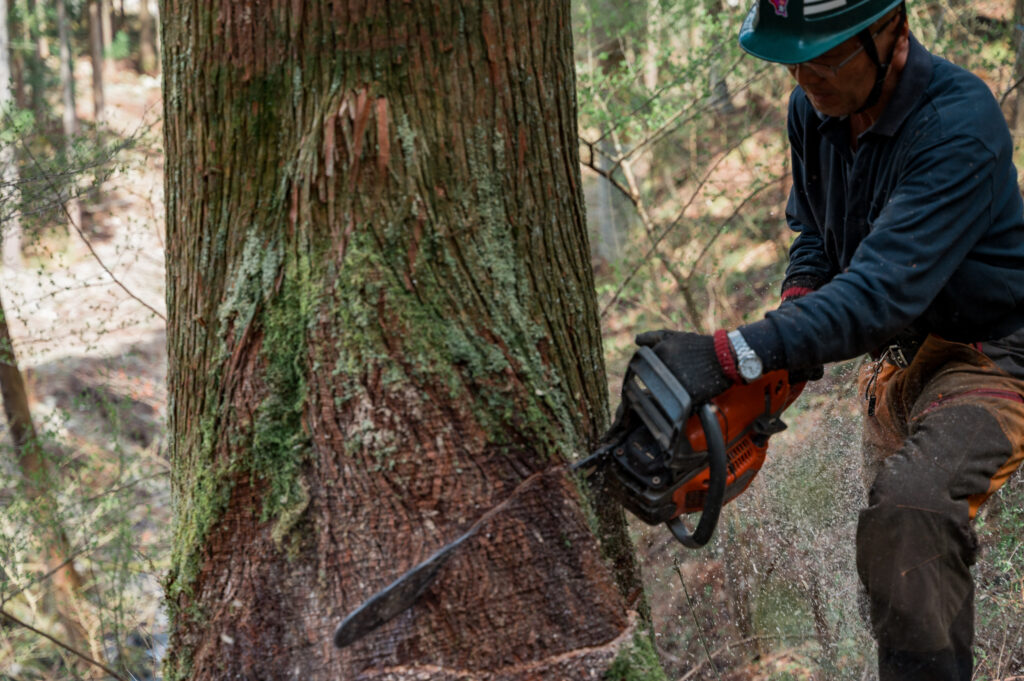
建築をつくることは、森の木を使うということである。
当たり前のことなのだが、建築を設計していると、このことを忘れてしまう。
図面を描き、柱や梁の寸法を決め、樹種を選ぶ。
しかしその木がどこの森で育ち、誰が育て、どのように伐られ、ここまでやってきたのかを知らないことが多い。
木は、ホームセンターや材木屋で生まれるわけではない。
森で生まれる。
一本の木が建築に使えるようになるまでには、何十年という時間がかかる。
人が木を植え、育て、枝を払い、間伐をする。
そうして育った木を伐り、山から運び出し、製材し、乾燥させる。
増井研究室では、森から伐り出した木を製材して家を造るという行為を見つめ直し、大量生産の手法ではない、丁寧な生産体制のあり方と、その効果について研究していく。
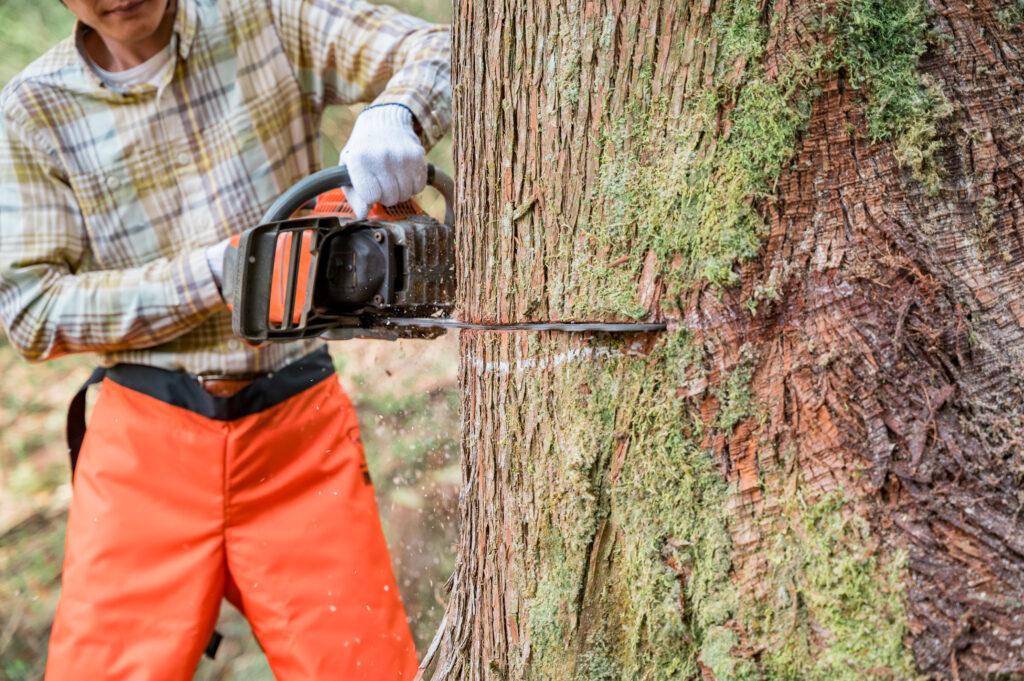
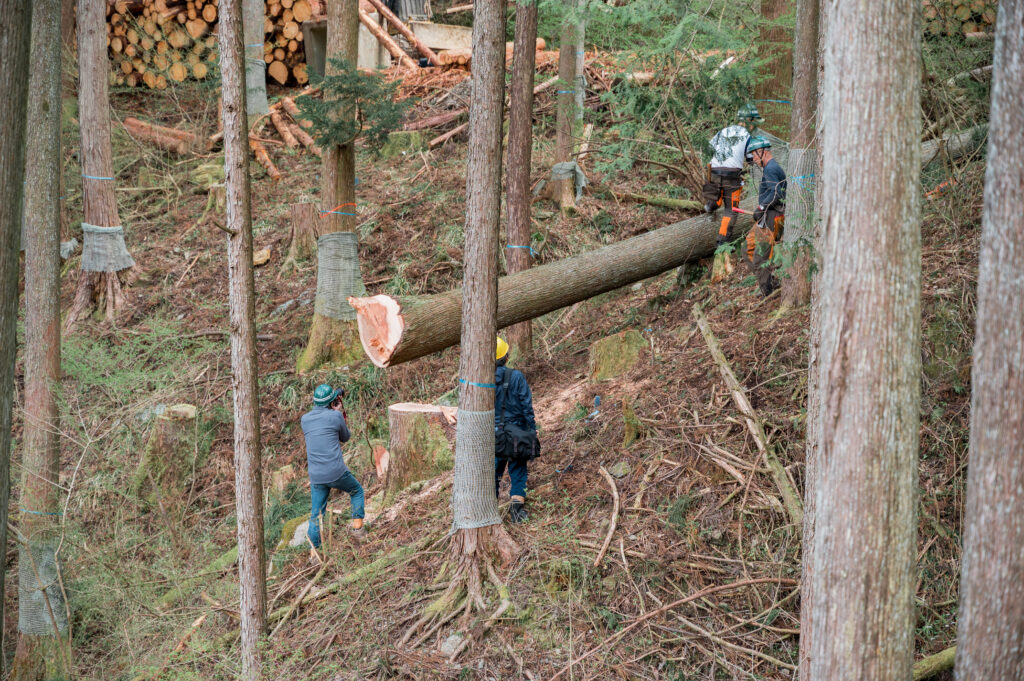
Building architecture means using wood from the forest.
It goes without saying, but when designing buildings, we tend to forget this.
We draw blueprints, determine the dimensions of columns and beams, and select wood species.
Yet we often don’t know in which forest that wood grew, who tended it, how it was harvested, or how it made its way here.
Wood isn’t born at home improvement stores or lumberyards.
It is born in the forest. It takes decades for a single tree to become usable in construction.
People plant the trees, nurture them, prune the branches, and thin the stands.
The trees grown in this way are then harvested, transported out of the mountains, milled, and dried.
At the Masui Laboratory, we are reexamining the process of milling timber harvested from the forest to build houses, and conducting research on a meticulous production system—one that eschews mass-production methods—and its effects.